Winner of Consultancy of the Year 2025

ORGANISATION DIAGNOSTIC

Identify the patterns affecting organisational performance

Our Organisation Diagnostic gives you an evidence-based view of the leadership, behavioural and organisational factors shaping performance. It helps you move beyond anecdotal feedback and surface symptoms, so decisions are based on a clearer understanding of what is really happening across the organisation.

When to run an

Organisation Diagnostic

Performance slowing with no clear cause

Delivery is becoming harder, decisions are slowing down, or momentum is fading, but the root issue is not clear.

Growth or change expose weak points

Scaling, restructuring, or shifting demands are putting strain on ways of working, leadership, or resilience.

Transformation underway, adoption lags

New priorities, systems or ways of working are landing at different speeds across the organisation.

Leaders see the problem differently

Different leaders or functions have different views on what is driving friction, underperformance or inconsistency.

Risk or behavioural concerns are building

Conduct, consistency or accountability issues suggest deeper tensions in culture, management or governance.

You need evidence before next steps

You want a clearer view before launching a programme, redesigning structures, or investing in the wrong solution.

what's uncovered

What the diagnostic can reveal

Looking only at the visible issues can lead to the wrong intervention. Our diagnostic helps identify the deeper organisational conditions shaping outcomes. We don’t just describe what people are experiencing, but identify the organisational factors that are most influencing those experiences.

Visible Issue

Patterns the diagnostic may reveal

Delays, drift or slow execution

Unclear decision rights, competing priorities or weak operating discipline

Inconsistent leadership messages

Misaligned expectations, fragmented ownership, or uneven sponsorship

Friction between teams

Structural disconnects, poor handovers or conflicting goals

Low momentum around change

Readiness gaps, overload, weak local translation or limited confidence

Uneven adoption of new tools or priorities

Capability differences, lack of support, unclear guardrails or manager variation

Concerns about conduct or accountability

Normalised behaviours, ambiguity, fear or governance weaknesses

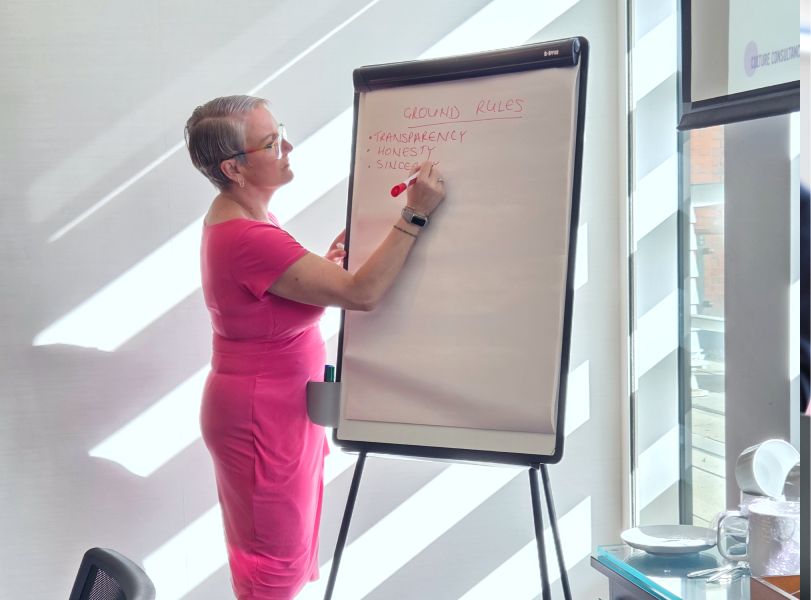
1. Evidence gathering

This can include surveys, interviews, focus groups, listening sessions and review of relevant organisational or people data.
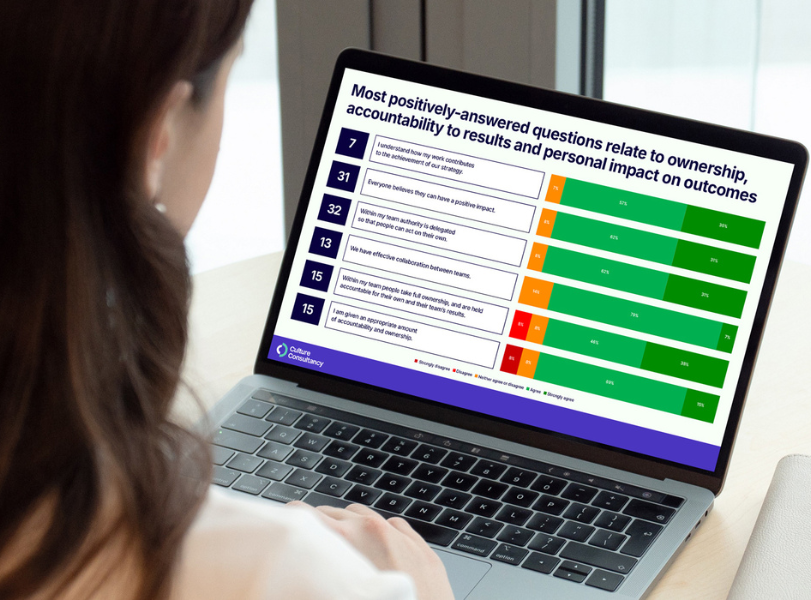
2. Pattern analysis

We analyse where performance is being enabled, where friction is emerging, and how experiences differ across teams, functions or levels.
3. Findings and recommendations

We bring the evidence together into a clear view of what is happening, what is driving it, and where leadership attention should focus next.

What's involved

The diagnostic process

Each diagnostic is shaped around your context, but typically incorporates multiple sources of evidence to build a fuller picture. Depending on the complexity and business need, the diagnostic can be completed rapidly through survey data and selected leadership interviews alone, or with added focus groups and listening sessions to gain additional qualitative insight.

Outcomes

The result is a stronger basis for decision-making, prioritisation and targeted action.

Clearer diagnostic findings

A clearer picture of the organisational factors affecting performance.

Insight across the business

Visibility of patterns across teams, functions, levels or locations where relevant.

A more grounded basis for action

Better evidence for deciding what needs attention, where and why.

Defined priority areas

A sharper view of the issues most likely to improve performance if addressed.

A baseline for future measurement

A stronger understanding of the real challenge and what is driving it

Practical recommendations

Clear guidance on next steps, from intervention to support or measurement.

For some organisations, the diagnostic is enough to clarify where attention should focus. For others, it provides the evidence base for more targeted support, helping ensure the next step is relevant, proportionate and focused on the right issues.

Possible next steps include

Leadership alignment and decision-making support

We help leaders turn insight into a focused roadmap, with clearer priorities, ownership and momentum for action.

Team effectiveness and ways of working intervention

We help leadership teams align more quickly, work together more effectively and create stronger conditions for performance.

Culture embedding and behaviour change

We help organisations translate ambition into everyday behaviour by embedding the right expectations, habits and systems across teams.

Manager support and local capability building

We strengthen manager capability where it most affects team performance and experience.

Let’s talk about your culture and what’s next

You’ll be speaking with Jo Geraghty, our founder and culture expert. She’ll personally guide you through your next steps

25 City Road, Epworth House
London EC1Y 1AA